
Our Philosophy and Beliefs
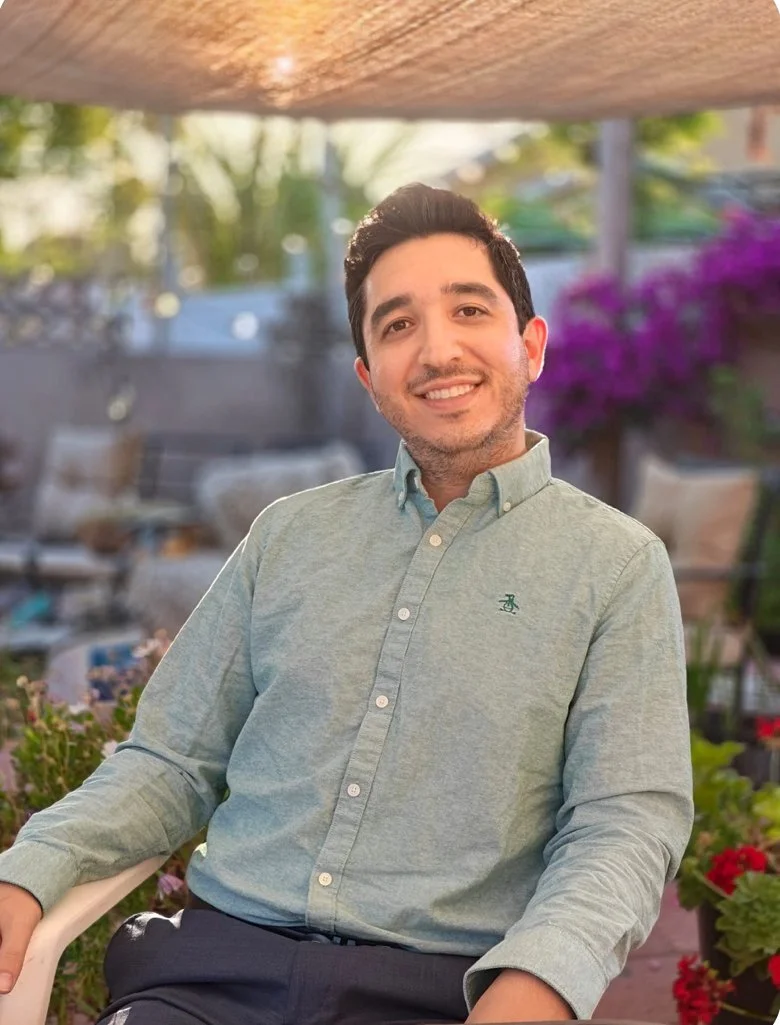
I do not share these beliefs as universal laws.
They are working conclusions from my life, coaching, study, observation, and continued experimentation. I expect them to evolve.
Adulting is difficult because much of what runs us is invisible.
1
People are taught how to perform, achieve, comply, compete, and appear capable. Few are taught how to recognize protective patterns, process emotion, repair relationships, regulate attention, question inherited beliefs, or distinguish intuition from fear.
Insight alone does not create transformation.
2
A person can understand a pattern perfectly and continue repeating it. Change requires enough safety, emotional capacity, support, practice, and repetition for a new response to become available.
Overthinking is often protection wearing the costume of intelligence.
3
The mind may create endless analysis to delay uncertainty, avoid emotional risk, preserve identity, or protect belonging. The goal is not to silence thought. It is to recognize when thinking serves discernment and when it prevents contact with truth.
Emotions are information, not commands.
4
Emotion may reveal need, value, injury, desire, fear, boundary, grief, or possibility. It does not automatically tell us what is objectively true or what action to take.
Intuition becomes more useful when paired with discernment.
5
Intuition can be understood as inner sensing that integrates subtle information, embodied experience, pattern recognition, values, and meaning. The practice is distinguishing quieter knowing from urgency, fantasy, fear, conditioning, and impulse.
Strengths can become constraints when overpowered.
6
Achievement can become worth-seeking. Empathy can become people-pleasing. Strategy can become paralysis. Adaptability can become avoidance of commitment. Positivity can become emotional bypassing.
Capacity precedes strategy.
7
Wisdom and skill become difficult to access under threat, shame, overwhelm, or collapse. Before demanding performance, ask what state the person is in and what would help them return to greater choice.
Harmony does not mean permanent peace.
8
Harmony includes tension, grief, anger, conflict, uncertainty, and change. It is the ability to remain in relationship with oneself while moving through them.
Self-trust is built through kept agreements.
9
Self-trust grows when a person listens inward, makes a clear choice, follows through, repairs when they do not, and learns from the result. Tiny acts of integrity become evidence.
Healthy interdependence is more mature than isolation.
10
Self-reliance does not require refusing support. Healthy interdependence allows people to retain responsibility while receiving, contributing, collaborating, and belonging.
Success without aliveness will become a golden cage.
11
A life may be admired outside and constricting inside. Status, income, responsibility, loyalty, and identity become prison bars when they prevent someone from acknowledging what is no longer true. This cage feels suffocating and extra painful when everyone externally praises your accomplishments
Insight should become an experiment.
12
Rather than asking people to accept an idea, invite a tiny test: name the emotion, tell one trusted person the truth, rest before it feels earned, make one decision without overexplaining, or ask what the body is protecting.
Spiritual/Religious language should increase responsibility, not erase it.
13
Ideas about God, energy, synchronicity, manifestation, soul, or intuition can expand meaning. They can also create judgment, avoid grief, accountability, boundaries, evidence, or practical action. A useful spiritual/religious practice should make a person more honest, embodied, loving, discerning, and responsible. If you are seeing the opposite, that individual is cut off from the very thing they preach.
Magic and miracles may begin where rigid certainty ends.
14
I use this language for awe, synchronicity, unexpected support, creative emergence, and possibilities that become visible when fear loosens. I do not use it to promise supernatural outcomes or exemption from reality.
A coach should not become the client's authority.
15
A coach can reveal patterns, ask difficult questions, offer frameworks, create experiments, and support integration. The purpose is to strengthen the client's relationship with their own truth, judgment, intuition, responsibility, and community.
These beliefs are a window into how I think and what I invite people to examine. The important question is not whether every sentence sounds right. It is whether exploring the ideas helps you become more honest, more capable of choice, and more alive.
Here are some of our Influences
My work has been shaped by decades of inquiry across strengths psychology, mental fitness, emotional intelligence, leadership, nervous-system regulation, human potential, and spiritual wisdom. Some of these influences came through formal training and certification. Others arrived through books, mentors, lived experience, and ideas that gave language to truths I had already begun to encounter.
Key on Harmony and Untangled & Unleashed are not applications of any single school of thought. They represent my ongoing effort to integrate what is useful across disciplines—and translate it into simple and cohesive original frameworks people can practice in the messiness of real life.
Lived experience with a variety of spiritual and religious systems
1
Receiving influence from a variety of texts and people sharing their perspectives regarding Christianity, Buddhism, Hinduism, Islam, Kabbala, Stoicism, Eastern and Western Philosophers, and more.
Energy and Quantum Physics
2
Channels and Intuitives like Darryl Anka (Bashar), Dolores Cannon, Esther and Jerry Hicks (Abraham Hicks), and Kaia Ra
Ekhart Tolle, Penney Pierce, Sadhguru, Carlo Rovelli, Shahin Jedian and more
Talent-based development and Mental fitness
3
Gallup StrengthsFinder-based authors, teachers, and trainers
Shirzad Chamine on Positive Intelligence
James Clear and many authors of articles and books on the mind and high performance
Insight into how the body influences our daily life
4
Dr. Zack Bush, Deb Dana, Peter Levine, Ann Frederick, Bessel van der Kolk, Marvin Karlins, Joe Navarro and more
Psychology, the Mind, and Thinking
5
Carl Jung, Richard Feynman, Mihaly Csikszentmihalyi, Shaun Achor, Brené Brown, Adam Grant, Nick Milo, Ichiro Kishimi, Fumitake Koga, Daniel Kahneman, Mel Robbins, Kim Krans, Jonah Berger, Jim Carrey, Benjamin Hardy, Ryder Carroll, Joshua Fields Millburn, Ryan Nicodemus, Mark Divine and more
Business and High Performance
6
Patrick Lencioni, Darren Hardy, Jim Rohn, Jim Collins, Kim Scott, Tony Robbins, Lisa Fabrega, Steve Jobs, Nassim Taleb, Ray Dalio, John Kotter, Gary Vee, and more